

Zakabet Official Website: Guide for Nigerian Bettors
Explore Zakabet official website 🖥️ with easy registration, diverse betting options, and solid security for Nigerian bettors to gamble safely and win big in ₦.
Edited By
Chinwe Eze
Zakabet Mines stands out as a growing force in Nigeria's mining sector, known for its active role in exploring, producing, and managing various mineral resources. The company's operations cover several precious and industrial minerals, including tin, columbite, and other solid minerals abundant in Nigeria's middle belt and south-west regions.
Unlike many mining firms struggling with outdated equipment and poor infrastructure, Zakabet Mines combines modern technology with local expertise to boost productivity. This combination allows it to not only extract minerals efficiently but also maintain environmentally responsible practices, which are increasingly crucial in Nigerian mining. The company’s efforts support the nation's goal of reducing dependency on oil by strengthening the non-oil economy through mining.
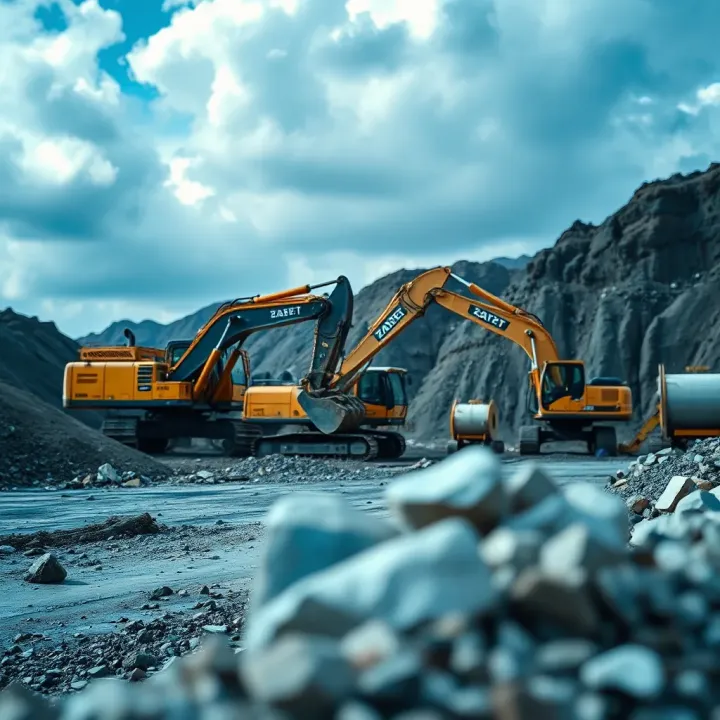
Zakabet Mines contributes significantly to local economies by employing hundreds of workers across different sites, creating jobs and supporting communities through investment in social projects such as schools and health clinics.
The firm's activities align with Nigeria's Mining Act and the policies set by the Ministry of Mines and Steel Development, ensuring compliance with regulations concerning safety, environmental management, and community engagement. This regulatory adherence enhances its trustworthiness and positions it well for partnerships and government support.
Among the challenges Zakabet Mines faces are logistical hurdles like poor road networks and unreliable power supply, common across many Nigerian mining locations. Despite these obstacles, the company maintains resilience, often using diesel generators and working closely with local authorities to improve access routes.
In terms of economic impact, Zakabet Mines contributes to Nigeria's GDP, helps increase solid mineral exports, and indirectly supports sectors like transportation and equipment supply. Its approach serves as a model for leveraging Nigeria’s mineral wealth responsibly, promoting sustainable mining practices that benefit both investors and local communities.
The company’s future outlook remains positive, especially as Nigeria continues to reform its mining policies and attract foreign investment. Zakabet Mines is poised to expand its operations and deepen community relations, driving growth in Nigeria's mining sector beyond the traditional oil focus.
Zakabet Mines plays a significant role in Nigeria's mining landscape, influencing both the extraction of valuable minerals and the country's economic development. With Nigeria striving to diversify its economy beyond oil, companies like Zakabet provide valuable contributions by boosting mineral production and job creation. Understanding their operations helps grasp the evolving dynamics of Nigeria's mining sector.
Zakabet Mines operates primarily in the central Nigerian region, where rich deposits of gold, tin, and columbite occur. The company uses a mix of conventional mining methods combined with modern equipment to enhance efficiency and reduce waste. For example, in their gold mining activities, they deploy advanced gravity separation techniques along with manual panning, which allows selective recovery of quality gold without heavy environmental disruption. Besides extraction, Zakabet is involved in ore processing and occasional mineral exploration around adjacent sites to identify new deposit zones.
Their operations are supported by local suppliers and SMEs providing machinery parts and transportation services, which helps build the mining value chain within Nigeria. Despite infrastructural challenges, Zakabet maintains steady production by investing in power solutions, including solar installations, to mitigate frequent power outages common in regional areas.
In Nigeria’s mining sector, Zakabet is regarded as a mid-sized but influential player. While companies like Dangote Cement dominate associated industries, Zakabet stands out by focusing on strategic minerals key for manufacturing and export, such as columbite used in electronics and aerospace. Their output contributes noticeably to Nigeria’s mineral exports, complementing revenues from solid minerals.
Zakabet's role extends beyond production. By actively engaging with government initiatives and working alongside the Ministry of Mines and Steel Development, the company helps shape industry best practices and regulatory compliance. Moreover, by fostering local employment and supporting community projects, Zakabet encourages sustainable mining that benefits both the economy and nearby populations.
Zakabet Mines' operations reflect the determination of Nigerian companies to make mining a reliable economic pillar beyond crude oil, signalling promising prospects if challenges around infrastructure and regulation are properly addressed.
This introduction sets the stage for deeper dives into specific minerals Zakabet extracts, its economic impacts, and how it navigates challenges within Nigeria's mining environment.
Zakabet Mines stands out in Nigeria's mining sector largely due to the variety of minerals it extracts. These minerals are not only valuable on their own but also contribute significantly to the broader Nigerian economy through industrial applications and export earnings. Understanding what Zakabet mines provides will clarify its role and influence.
Gold remains one of Nigeria's most coveted minerals, and Zakabet Mines taps into this resource with notable success. Gold mining supports not just direct revenue from sales but also promotes downstream activities such as jewellery making and investment products. Unlike crops or manufactured goods, gold offers a stable store of value especially useful when the naira is volatile. This precious metal's demand internationally ensures that gold mining activities add hard currency to Nigeria's coffers.
Tin mined by Zakabet plays a strategic role, especially in Nigeria’s industrial sectors. This metal is crucial for electronics, soldering, and plating processes. Tin is used locally in manufacturing components for household appliances and electronics, and Nigeria also exports some quantities. The mineral’s significance extends beyond its raw form, as it supports emerging Nigerian industries striving for import substitution.
Columbite is another key mineral from Zakabet, prized for its application in producing tantalum, which is essential in capacitors and high-tech gadgetry such as smartphones and medical devices. Nigeria holds one of the world's significant columbite deposits, and companies like Zakabet are instrumental in making this resource available to global tech manufacturers. By mining columbite, Zakabet Mines contributes directly to a sector intimately tied to global technological progress.
Besides the big three, Zakabet Mines also extracts other industrial minerals, including quartz, feldspar, and barite. These minerals have diverse applications ranging from glass manufacturing, ceramics, to oil drilling. Such minerals might not grab headlines like gold or columbite but are vital to both local industries and export earnings. For example, barite is critical in the oil industry—a sector deeply linked with Nigeria’s economic backbone.

The minerals Zakabet Mines extracts help diversify Nigeria’s economy, lessening the overdependence on oil. Each mineral has specific roles:
Gold provides financial security and fosters artisan mining.
Tin supports local industrialisation efforts.
Columbite connects Nigeria to global technology markets.
Other industrial minerals underpin manufacturing and oil sector activities.
By generating employment and foreign exchange, Zakabet Mines helps strengthen local economies beyond the immediate mining zones. The revenue from these minerals funds government budgets through taxation and boosts small and medium enterprises connected to mining supply chains.
In summary, Zakabet Mines' extraction portfolio is a cornerstone in Nigeria's mining potential. Its minerals feed both local industries and international markets, positioning the company as a key player in economic diversification and industrial growth.
Zakabet Mines holds a significant position not just in mineral extraction but also as a contributor to the socio-economic fabric of its host communities and Nigeria's broader economy. Understanding its impact involves examining how it creates jobs, supports community welfare, generates government revenue, and fosters small business growth around mining activities.
Zakabet Mines provides direct and indirect employment, which has helped reduce unemployment in surrounding areas. The mine employs workers across various skill levels — from manual labourers and technicians to engineers and managers. This diversity in job roles allows locals to access formal careers within the mining sector. For example, in Jos Plateau, where Zakabet operates, villagers who might otherwise depend solely on farming or petty trading now find seasonal and permanent jobs at the mine.
Such employment isn’t just about salaries; it contributes to skill development and knowledge transfer. Many young workers who began at the lowest ranks have gained technical skills that open doors beyond mining. This practical exposure often leads to better job prospects in the regional industrial landscape.
Zakabet Mines invests in various community development projects that improve local living conditions. The company has funded the construction of clean water facilities and basic healthcare centres in mining-adjacent villages, making tangible improvements in residents’ quality of life. Schools have also benefited through provision of educational materials and occasional scholarships for promising students.
Importantly, these projects also help build trust between the mine and its neighbours, reducing tensions that sometimes arise over land use or environmental concerns. One example is the sponsoring of local road repairs that ease access to markets where women sell farm produce or food items, thus supporting everyday livelihoods unrelated directly to mining.
As a formally registered mining operation, Zakabet Mines contributes considerably to government coffers through several forms of tax payments. These include corporate income tax, royalties from mineral extraction, and local government levies. This inflow of revenue helps fund state and federal programmes essential for infrastructure, health, and education services.
The taxes paid mean that Zakabet Mines’s operations indirectly support public services beyond the immediate mining community. The government’s ability to collect reliable tax income is crucial given Nigeria’s ongoing efforts to diversify the economy beyond oil and create sustainable funding for development.
Beyond its direct activities, Zakabet Mines actively supports small and medium enterprises (SMEs) within its supply chain. Local businesses provide services such as catering, transportation, equipment repairs, and security to the mine. This partnership stimulates economic activity and income circulation within nearby towns.
For instance, transport companies operating okada and keke often secure contracts to ferry staff and materials. Mama puts and bukaterias near the mine have also seen increased patronage, thanks to workers needing daily meals. Such indirect support helps strengthen the informal sector while creating avenues for entrepreneurship among local Nigerians.
Zakabet Mines’s social and economic footprint extends well past the extraction sites. Its role in employment, community upliftment, tax generation, and local enterprise support marks it as a fundamental player in Nigeria's resource-driven growth narrative.
Zakabet Mines, like many mining organisations in Nigeria, navigates a complex landscape shaped by operational challenges and regulatory demands. Understanding these factors is critical because they directly affect productivity, compliance, and sustainable growth. Addressing such challenges ensures the firm can maintain steady operations while aligning with national mining policies.
Poor infrastructure remains a significant hurdle for Zakabet Mines. In particular, inconsistent power supply and inadequate road networks hinder both extraction and transportation efficiency. For example, unreliable electricity forces the mine to depend on generators, which raises operational costs and disrupts production schedules. Moreover, bad roads delay mineral freight to ports or processing centres, increasing turnaround time and reducing profitability.
Mining activities inevitably impact the environment, and Zakabet Mines faces pressure to manage effects like land degradation, water contamination, and dust pollution. Nigeria’s diverse ecosystems near mining sites require careful handling to avoid long-term damage. The environmental issues heighten community tensions because local farmers and residents rely heavily on the land and clean water. If not managed properly, these concerns can escalate to protests or legal restrictions.
Illegal mining and security challenges also complicate Zakabet Mines’ operations. Unauthorised miners often operate on or near company concessions, causing resource loss and safety risks. Security threats, sometimes tied to armed groups or local conflicts, threaten personnel and assets. Such risks increase insurance costs and may force temporary shutdowns. For instance, some mining zones in Nigeria’s Plateau State have reported clashes that disrupted mineral extraction.
The Ministry of Mines and Steel Development oversees mining regulation in Nigeria, ensuring companies like Zakabet Mines adhere to set guidelines. The ministry's role involves policy formulation, monitoring operations, and facilitating sector development. Its engagement helps create a structured environment where mining firms can operate transparently while contributing to the national economy. Compliance with ministry regulations guarantees legitimacy and access to government support.
Mining in Nigeria demands rigorous licensing and permit acquisition, which Zakabet Mines must follow to avoid penalties. The process involves securing exploration licences, mining leases, and environmental permit approvals. These legal requirements help regulate who extracts minerals and how resources are managed. For example, failure to obtain proper permits could lead to fines or licence revocation, disrupting business activities.
Nigeria enforces environmental and safety standards to mitigate negative mining impacts. Zakabet Mines is obligated to conduct Environmental Impact Assessments (EIAs) before commencing new projects. Additionally, the mine must implement safety protocols to protect workers and neighbouring communities. Adhering to these standards reduces accidents, environmental damage, and legal liabilities. It also builds trust with communities by showing the company’s commitment to responsible mining practices.
Clear operational strategies and regulatory compliance are fundamental for Zakabet Mines to sustain growth, protect its workforce, and serve local communities effectively.
Together, these operational and regulatory elements define the framework within which Zakabet Mines operates, highlighting both risks and opportunities in Nigeria’s mining sector.
Zakabet Mines stands at a critical juncture where strategic planning and future-oriented initiatives can determine its lasting impact on Nigeria's mining sector. Planning for future prospects is essential because it ensures that the company not only maintains current production levels but also adapts to evolving industry demands and technological changes. This forward-looking approach also enhances the economic benefits for local communities and Nigeria at large while addressing environmental and regulatory challenges.
Zakabet Mines is actively integrating modern mining machinery to improve efficiency and safety across its operations. The adoption of equipment such as automated drilling rigs and GPS-guided excavation tools reduces manual labour risks and improves precision in mineral extraction. For example, using updated crushing and sorting machines has increased ore yield by significant margins while cutting operational costs.
Modern equipment also allows Zakabet Mines to monitor production in real time, making it easier to adjust processes quickly. This reduces downtime and minimises waste, directly impacting the company’s profitability and contributing to Nigeria’s overall mining sector growth.
Expanding into previously untapped deposits is a core part of Zakabet Mines' strategy. The company has employed geophysical surveys and advanced satellite imaging to identify promising mineral sites outside their traditional zones, particularly in states where mining remains underdeveloped. This exploration not only increases resource reserves but spreads economic opportunities to new regions.
By discovering new deposits, Zakabet Mines positions itself to meet future mineral demand, essential for Nigeria's ambitions to boost local content in industries like electronics and construction. This strategy also aligns with government goals to diversify the economy beyond oil.
Zakabet Mines recognises that sustainable mining is no longer optional but necessary for long-term viability. The company has introduced measures such as water recycling systems to curb excessive consumption and manages tailings responsibly to prevent land degradation. Planting trees and restoring mined lands are part of its reclamation efforts to maintain ecological balance.
These steps help reduce environmental risks associated with mining and improve Zakabet’s standing with regulators and communities. In Nigeria, ongoing issues with erosion and deforestation heighten the need for such responsible practices.
Community engagement remains a strategic priority for Zakabet Mines. The company collaborates with local leaders to launch educational programmes and healthcare initiatives, offering tangible benefits beyond employment. Regular town hall meetings ensure residents’ concerns guide decision-making, which fosters trust and reduces conflicts.
Good community relations not only smooth mining operations but also create a social licence to operate, essential in regions where mining projects often face resistance. Zakabet’s proactive approach helps embed its presence positively in local economic and social landscapes.
The future success of Zakabet Mines hinges on adopting smart technology and ensuring sustainability while balancing community needs—this deliberate direction enhances Nigeria’s broader mining sector prospects and stability.
Explore Zakabet official website 🖥️ with easy registration, diverse betting options, and solid security for Nigerian bettors to gamble safely and win big in ₦.
Based on 12 reviews